STCW Basic Safety Training Australia | AMSA Certificate of Safety Training (CoST)
The mandatory first step for anyone wanting to work at sea.
Whether you’re heading for Superyachts in the Mediterranean, cruise ships, commercial vessels, or charter boats in Australia — this is the certificate every employer will ask for before you step on board.
What You Walk Away With
When you complete this course with Superyacht Crew Academy, you leave with:
Your STCW Statement of Completion Certificate — Internationally recognised, accepted by employers worldwide, and issued upon successful completion of your training. This certification allows you to work on Superyachts and vessels internationally straight away. This is also used to apply to AMSA for your CoST card — the legal requirement for working on Australian commercial vessels.
A nationally recognised Statement of Attainment for the MARSS00033 Safety Training Certification Skill Set — covering the required safety training units aligned with STCW standards.
Working in Australia (Important)
If you wish to work on commercial vessels in Australia, you must hold an AMSA Certificate of Safety Training (CoST).
Your STCW Statement of Completion Certificate is internationally recognised and can be used to work on Superyachts and foreign-flagged vessels, including those operating in Australian waters. However, it is not sufficient on its own for work on Australian commercial vessels.
To work on Australian-flagged commercial vessels, you will need to apply directly to AMSA for your CoST card using your completed training. For application requirements and instructions, please refer to the AMSA website.
Is This a Real STCW Certificate?
Yes — and it’s worth understanding why.
STCW stands for Standards of Training, Certification and Watchkeeping for Seafarers. It’s an international convention established by the IMO (International Maritime Organization) that sets the global baseline for maritime safety training across 150+ countries. Every commercial vessel in the world operates under it.
In Australia, STCW Basic Safety is delivered as the AMSA Certificate of Safety Training (CoST). Australia is on the IMO white list, which means your qualification is recognised and accepted by employers globally — including superyacht captains in the Med and Caribbean.
So when you complete this course, you have a genuine, internationally accepted STCW.
What the Course Covers
This course delivers all five STCW Basic Safety modules:
- STCW Personal Survival Techniques (Table A – VI/1-1)
- STCW Basic Fire Prevention & Firefighting (Table A – VI/1-2)
- STCW Elementary First Aid (Table A – VI/1-3)
- STCW Personal Safety and Social Responsibilities (Table A – VI/1-4)
- STCW Proficiency in Maritime Security Awareness (Reg V1/6 and Part A of Section A – VI/6 Paragraph 4)
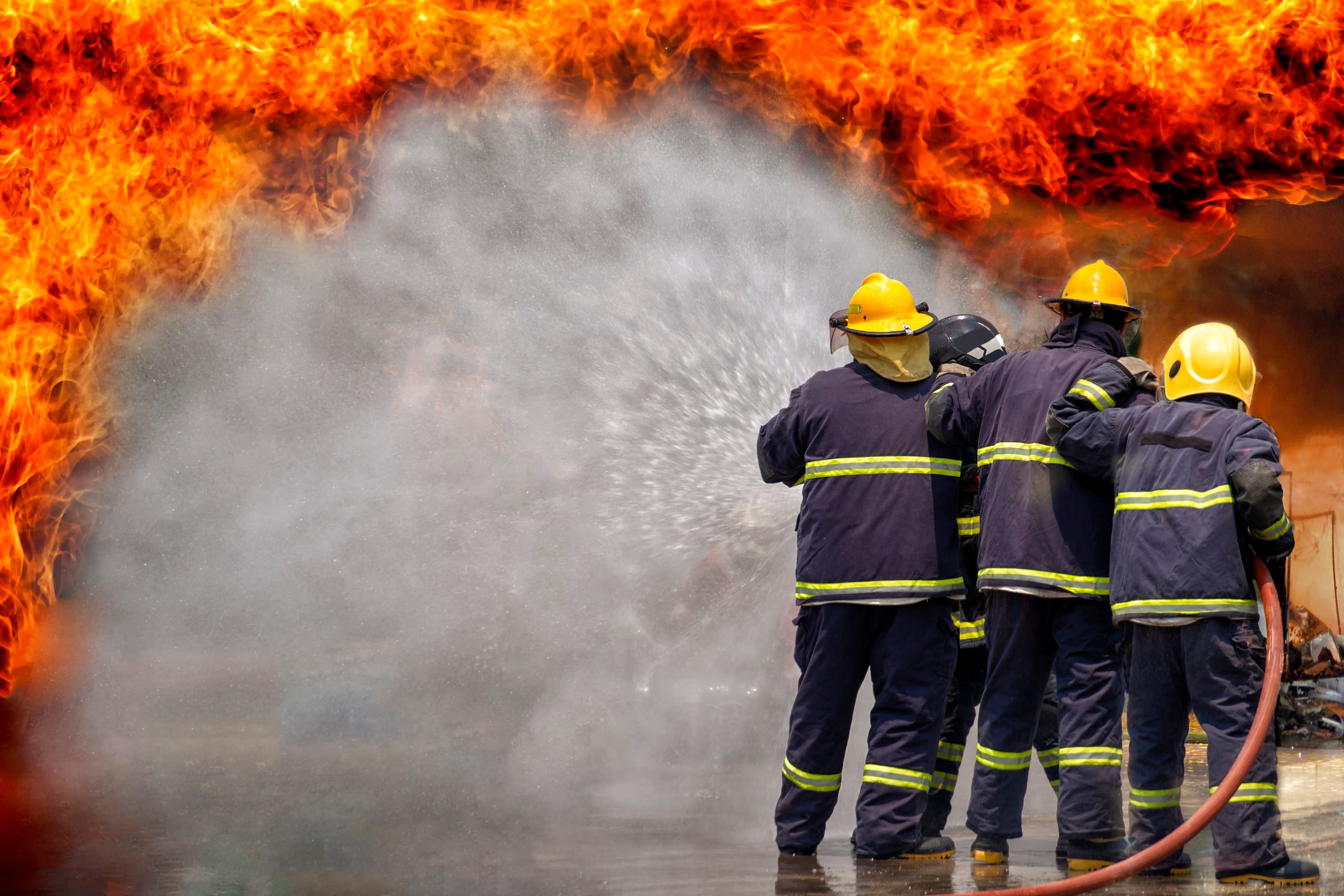
Training includes comprehensive, hands-on practical sessions, where you will actively participate in in-water survival exercises, live firefighting scenarios, and emergency response drills—going well beyond traditional classroom-based learning.
*You may be exempt from attending the Elementary First Aid module/training. To be exempt, you must hold BOTH of the following Australian First Aid units of competency:
-
HLTAID011 – Provide First Aid. (This unit is valid for 3 years, however if it expires within the next 6 months you must complete this unit again). If exempt, you will be granted credit transfer as part of your enrolment for this unit.
-
HLTAID009 – Provide Cardiopulmonary Resuscitation. (Completed within the past 12 months, either individually or with HLTAID011).
Please acknowledge you meet these requirements as part of your booking, administration staff will then verify your certification to ensure you are exempt from First Aid upon enrolment.
A $165 discount will be applied to your enrolment if you hold a valid first aid certification.
Can I Work on Superyachts With This Certificate?
Yes. STCW Basic Safety is the non-negotiable entry requirement for Superyacht crew worldwide. Completing this course puts you in a position to be hired.
That said, it’s worth being upfront: the certificate gets you in the door, but Captains also want to see a strong CV, a valid ENG1 medical, and ideally you being in the right place at the right time (the Med or Caribbean during season).
If you want to maximise your chances, consider completing the Superyacht Deckhand or Interior Crew training packages — you’ll be significantly more competitive when looking for work.
What Vessels Can I Work On?
Your AMSA CoST qualifies you to work across a wide range of commercial vessels both internationally and nationally. Whether you’re chasing Superyachts overseas or looking for work closer to home, this is the foundation certificate every commercial vessel type requires.
Superyachts
Cruise Ships
Offshore Support Vessels
Tugboats
Passenger Ferries and Charter Vessels
Cargo and Container Ships
Research and Survey Vessels
Who Can Do This Course?
This is an entry-level course. You don’t need any prior maritime experience.
You need to be:
- 16 years or older
- Reasonably fit — there are physical elements including swimming, firefighting drills, and survival simulations
- Comfortable with English
- In good general health
Colour vision deficiency (colour blindness) does not prevent you from completing the course, though it may affect certain navigational officer roles later in your career.
What Certifications Will You Receive Exactly?
- Personal survival techniques (STCW VI/1, Table A-VI/1-1)
- Fire prevention and fire fighting (basic) (STCW VI/1, Table A-VI/1-2)
- Elementary first aid (STCW VI/1, Table A-VI/1-3)
- Personal safety and social responsibilities (STCW VI/1, Table A-VI/1-4)
- Security awareness training (STCW VI/6, Table A-VI/6-1)
This is your internationally recognised STCW certificate, accepted by employers worldwide immediately. This is also used to apply to AMSA for your CoST card — the legal requirement for working on Australian commercial vessels.
- HLTAID011 – Provide First Aid
- MARF035 – Contribute to fire prevention and firefighting (basic firefighting)
- MARF037 – Follow vessel security procedures (security awareness training)
- MARF041 – Observe personal safety and social responsibility (PSSR)
- MARF046 – Survive at sea in the event of vessel abandonment and personal survival techniques (PST)
*You may be exempt from attending the Elementary First Aid module/training. To be exempt, you must hold BOTH of the following Australian First Aid units of competency:
- HLTAID011 – Provide First Aid. (This unit is valid for 3 years, however if it expires within the next 6 months you must complete this unit again). If exempt, you will be granted credit transfer as part of your enrolment for this unit.
- HLTAID009 – Provide Cardiopulmonary Resuscitation. (Completed within the past 12 months, either individually or with HLTAID011).
Please acknowledge you meet these requirements as part of your booking, administration staff will then verify your certification to ensure you are exempt from First Aid upon enrolment.
A $165 discount will be applied to your enrolment if you hold a valid first aid certification.
Please acknowledge you meet these requirements as part of your booking, administration staff will then verify your certification to ensure you are exempt from First Aid upon enrolment.
Online Learning & Course Structure
This course is delivered using a blended learning approach, combining online study with practical, face-to-face training to ensure you are fully prepared for real-world scenarios.
Access to the Student Portal
You will receive your login details for the aXcelerate student portal 1–2 weeks prior to your course start date.
This allows you to complete the required online learning before attending your practical training.
Online & Blended Units
The following units include online interactive learning components:
- MARF037 – Follow vessel security procedures (Security Awareness Training)
Completed fully online prior to attending your course. - MARF041 – Observe personal safety and social responsibility (PSSR)
Completed partially online, followed by a 2-hour classroom session focused on scenarios, safety discussions, and practical application. - HLTAID011 – Provide First Aid
Completed partially online, followed by a 2-hour face-to-face practical session where you will demonstrate essential CPR & first aid skills.
Face-to-Face Practical Training
The following units are delivered in person and focus on hands-on skills and practical assessment:
- MARF046 – Survive at sea in the event of vessel abandonment and personal survival techniques (PST) — Full-day training including classroom theory and practical survival exercises.
- MARF035 – Contribute to fire prevention and firefighting (Basic Firefighting) — Full-day training covering both theory and live firefighting practicals.
Physical Requirements — Please Read Before Enrolling
Both practical units involve physically demanding, hands-on assessment in a real training environment. Students must be physically capable of completing the practical tasks in order to be assessed as competent. There are no alternative or modified assessment pathways for these requirements.
Sea survival (MARF046) — you must be able to:
- Swim unaided, without a flotation aid, buoyancy vest or assistance from staff
- Tread water or float unaided for a minimum of 10 minutes without a lifejacket
- Enter the water from height and remain calm and in control while submerged and resurfacing
- Swim while wearing an immersion suit and lifejacket
- Right an inverted liferaft and board a liferaft from the water unaided
- Remain in the water for extended periods, including in cool water conditions
Firefighting (MARF035) — you must be able to:
- Fight live, real fires in a purpose-built training facility, including exposure to heat, smoke and flame
- Wear and work in self-contained breathing apparatus (SCBA), which weighs approximately 15 kg and restricts movement, vision and breathing
- Enter and work in confined, enclosed and dark spaces, including crawling and working in restricted visibility
- Carry, drag and operate charged fire hoses and firefighting equipment
- Perform casualty drags and search-and-rescue tasks
What This Means for You
This structure is designed to:
- Give you flexibility to complete theory components before your course
- Reduce time spent in the classroom
- Focus your in-person training on practical, real-world skills
- Ensure you arrive confident and ready to participate
How to Get Your AMSA CoST Card
After the course, you’ll apply to AMSA using your STCW Statement of Completion. There are now two ways to do this:
Online through myAMSA (new): Since 18 August 2026 you can apply online at any time, upload your documents, pay and track your application from a secure account. You’ll need a myID Digital ID and a myAMSA account. Once approved, you receive a digital certificate you can keep in your phone’s digital wallet.
Using Seafarer Form 419: The traditional route, still fully valid. If you’re in Australia, lodge in person at a participating Australia Post outlet with your documents and application fee. If you’re overseas, email your completed application to STCW.applications@amsa.gov.au and AMSA will advise you on paying the fee online.
Either way the fee is $112 and AMSA assesses applications within 28 business days. You don’t need a medical certificate.
Not sure which route suits you, or want a worked example of Form 419? [Read our full step-by-step guide to getting your CoST card →]
We’ll also walk you through the application during your course, so you leave knowing exactly what to do.
For more information head to AMSA’s official website – Click Here
Where Training Takes Place
Classroom: Superyacht Crew Academy, Unit 5a/4 Skyline Place, Frenchs Forest NSW 2086
Firefighting Practical: NSW Mines Rescue Facility
Sea Survival Practical: Warringah Aquatic Centre
We provide a complimentary shuttle to all practical locations outside our office location.
Ready to Get Started?
This is the course that makes you employable at sea. Everything else builds from here.
BOOK ONLINE BY CLICKING THE BOOK NOW BUTTON UP THE TOP OF PAGE IF YOU ARE ON DESKTOP OR DOWN THE BOTTOM ON MOBILE.

)
)